
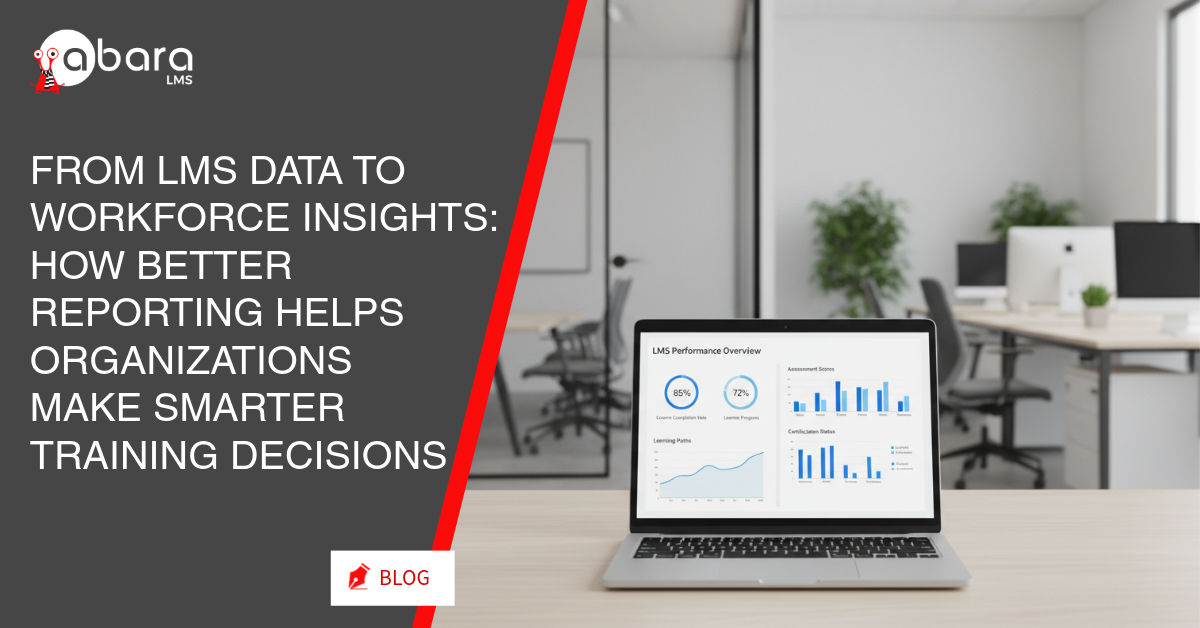
Every organization invests in learning to build skills, improve performance, ensure compliance, and prepare employees for future challenges. Along the way, every training programme generates valuable data, from course completions and assessment scores to certification records and learner progress.
Yet, despite having access to all this information, many organizations still struggle to answer an important question:
On this Page
What is our learning data telling us about our workforce?
For many Learning & Development (L&D) teams, reporting begins and ends with completion rates. While these metrics are useful for tracking participation, they only provide a snapshot of learning activity. They don’t explain whether employees are developing the right skills, whether compliance requirements are being met, or whether training programmes are delivering measurable business value.
This is where a modern Learning Management System (LMS) makes a real difference. By bringing learning data together in one place, organizations gain the visibility needed to monitor progress, evaluate training effectiveness, and make informed decisions that support both workforce development and business goals.
Moving Beyond Course Completion Reports
Completing a course is an important milestone, but it isn’t the finish line.
Business leaders today want to understand how learning contributes to organizational performance. They need answers to questions such as:
- Are new employees completing onboarding on time?
- Which teams require additional product training?
- Where are certification renewals approaching?
- Which learning programmes are engaging employees the most?
- Are assessments highlighting knowledge gaps that need attention?
Without meaningful reporting, finding these answers often involves manually compiling data from spreadsheets or multiple systems. This process is time-consuming and can make it difficult to identify trends or respond quickly to changing business needs.
Organizations that have already digitized their training are in a much stronger position. If you’ve recently moved away from manual tracking, our blog From Excel Sheets to LMS: Digitizing Training for Small Businesses explores how centralizing learning creates the foundation for more effective reporting and training management. The next step is using that data to improve decision-making across the organization.
Turning Learning Data into Meaningful Insights
The true value of learning data lies in how it is used.
Instead of reviewing reports only at the end of a training programme, organizations can use ongoing insights to understand learner progress, identify areas where additional support may be needed, and continuously improve the learning experience.
For example, assessment reports can reveal where learners consistently struggle, helping L&D teams refine course content or introduce additional resources. Learning progress reports can highlight departments that may require extra support to stay on track, while certification reports help administrators monitor mandatory training before renewal deadlines become a concern.
These insights allow organizations to be proactive rather than reactive, making small improvements throughout the learning journey instead of waiting until annual reviews to identify challenges.
With Advanced Reporting Features in Abara LMS, administrators and managers can access centralized dashboards, generate reports, monitor learner progress, and gain better visibility into training activities across teams. Rather than spending time gathering information from different sources, decision-makers have the data they need readily available to support everyday planning.
Different Teams, Different Decisions
Learning data supports far more than the L&D function. Across the organization, different teams rely on training information to achieve different objectives.
For HR teams, reporting provides visibility into onboarding progress, mandatory learning, and employee development. Understanding how employees are progressing through structured learning journeys makes it easier to support career growth and identify opportunities for continuous development. Organizations using an Employee Training LMS can manage these learning initiatives from a single platform while tracking progress across departments.
Compliance teams need confidence that mandatory training remains up to date. Accurate reporting helps them monitor certification status, identify upcoming renewals, and maintain training records that simplify audit preparation. A dedicated Compliance Training LMS helps organizations centralize these activities while reducing the administrative effort associated with regulatory training.
Sales managers have another perspective. Before introducing a new product or service, they need assurance that sales representatives have completed the necessary learning and understand the latest product information. A Sales Team Training LMS enables managers to monitor course completion and assessment performance, helping teams prepare with greater confidence before engaging customers.
Although each department uses learning data differently, they all rely on the same principle: having timely, reliable information that supports better decisions.
Measuring the Impact of Learning
One of the most common questions senior leaders ask is, “Is our training making a difference?”
Answering this question requires more than attendance records. It requires organizations to evaluate how learning programmes are performing over time and where improvements can be made.
For example, if a particular onboarding course consistently receives strong assessment results and employees complete it on schedule, it may indicate that the programme is well structured and supporting new hires effectively. Conversely, if learners regularly struggle with specific assessments or abandon courses midway, it may signal that content needs updating or additional learning support is required.
This continuous evaluation helps organizations improve learning quality while making better use of their training investment.
Businesses creating digital learning at scale also benefit from strong Course Creation & Management capabilities, ensuring that learning content remains consistent, relevant, and easy to update as business needs evolve.
Learning data becomes even more valuable when viewed alongside broader workforce development initiatives. As discussed in our blog Upskilling and Career Growth: How Organizations Build Future-Ready Workforces, continuous learning is most effective when organizations can measure progress, identify skill development opportunities, and adapt learning programmes over time.
Supporting Continuous Improvement with Learning Data
The value of learning data extends beyond tracking individual training programmes. Whether organizations are delivering employee onboarding, compliance training, customer education, sales enablement, or blended learning, consistent reporting provides the visibility needed to monitor progress and improve outcomes over time.
By reviewing learner progress, assessment performance, certification status, and course completion trends, organizations can identify opportunities to refine training programmes, support learners more effectively, and align learning initiatives with business priorities. As discussed in our blogs, Integrating Digital & In-Person Training for Maximum Impact and How an LMS Simplifies Certification Compliance in Oil & Gas, having access to accurate learning records helps organizations maintain consistency while adapting to changing workforce needs.
A strong reporting strategy also begins with the right foundation. From creating structured learning experiences to maintaining historical training records during system transitions, organizations benefit from an LMS that supports every stage of the learning lifecycle through comprehensive reporting, course management, and seamless data migration.
Conclusion
Learning data is most valuable when it helps organizations make better decisions, not just better reports. By understanding learner progress, measuring training effectiveness, and identifying opportunities for improvement, businesses can ensure their learning programmes remain aligned with workforce needs and organizational goals.
As organizations continue to invest in employee development, compliance, and continuous learning, the ability to transform everyday learning data into meaningful workforce insights will become increasingly important. Abara LMS provides the visibility needed to support continuous improvement, helping organizations build a more capable, informed, and future-ready workforce.