
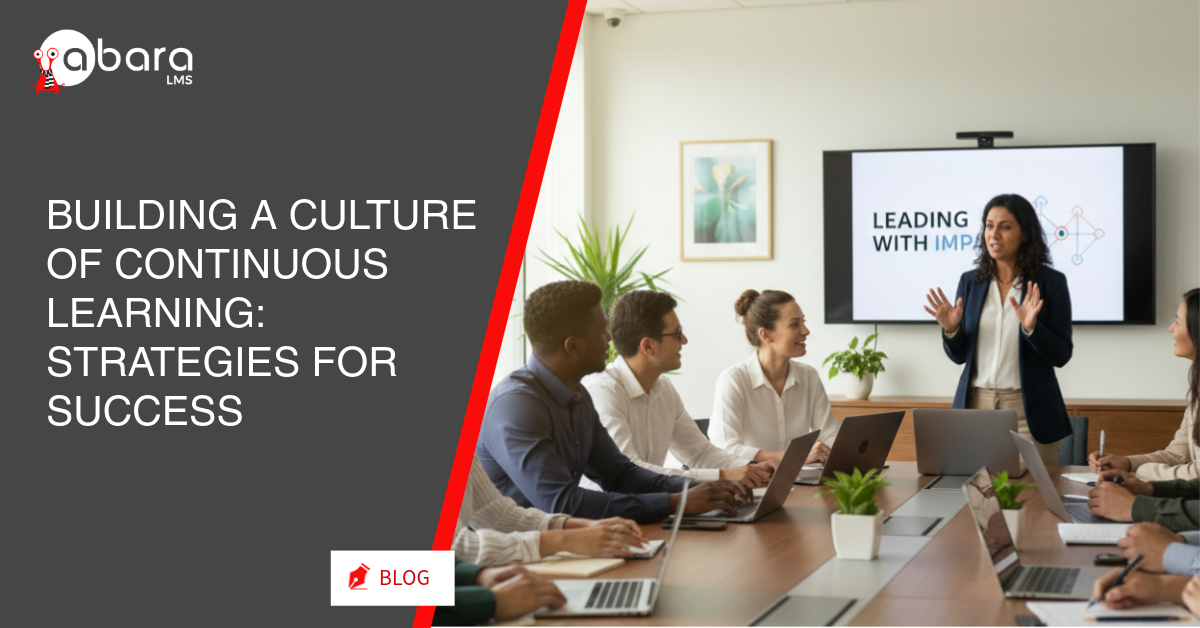
For years, workplace learning followed a familiar pattern: onboard employees, assign mandatory courses, conduct occasional workshops, and revisit training when a new process, product, or regulation required it.
That model is becoming harder to sustain. Technology is changing how work gets done, job responsibilities are evolving, and employees are expected to build new capabilities while continuing to perform their existing roles. The challenge is not simply providing more training. It is creating an environment where learning becomes part of how people work. That is the foundation of a culture of continuous learning.
On this Page
What Does a Culture of Continuous Learning Really Mean?
A continuous learning culture goes beyond having a large course library or asking employees to complete training hours. It means employees have regular opportunities to learn, apply knowledge, receive feedback, and build capabilities throughout their careers.
Learning may be a short course before a new responsibility, a session with a subject matter expert, a certification refresher, or a quick resource accessed when help is needed. The goal is to move from “training when required� to “learning whenever it creates value.�
Make Learning a Leadership Priority
A learning culture starts at the top. Employees are more likely to treat learning as part of their role when leaders show that development is not something to pursue only when there is spare time.
That means discussing development during one-to-ones, encouraging relevant learning, and recognizing employees who apply new knowledge. If an organization is introducing AI tools, entering a new market, or changing its customer service model, learning should be part of the implementation strategy. Learning is not separate from business performance; it enables it.
Give Employees Learning That Fits Their Roles
One of the fastest ways to weaken a learning culture is to make everyone complete the same generic training. Continuous learning works better when employees can access learning relevant to their responsibilities and immediate challenges.
Organizations can create role-based journeys for different workforce groups. An LMS can support this through assignments, learning paths, and course management. Abara LMS provides employee training capabilities to help teams build structured experiences as requirements change.
The shift toward skills-based workforce development is changing what organizations expect from learning platforms. Abara LMS explores that trend in Why Skills-Based Learning Is Changing LMS Requirements in 2026.
Move Learning Into the Flow of Work
Employees do not always need a 60-minute course. Sometimes they need a short explanation, product update, checklist, or refresher immediately before completing a task.
A centralized learning environment can provide relevant resources when they are needed, reducing the gap between recognizing a learning need and acting on it. Instead of asking, “When can I take training?�, employees can increasingly ask, “What do I need to know to do this well?�
Combine Formal and Experiential Learning
A continuous learning culture should not depend entirely on self-paced courses. Employees also learn from managers, colleagues, instructors, subject matter experts, coaching, and real workplace experiences.
Organizations can combine digital learning with instructor-led training, virtual sessions, discussions, and practical application. Abara LMS supports different learning formats, helping organizations create flexible learning experiences. For a deeper look at this approach, see Integrating Digital and In-Person Training: A Blended Learning Strategy.
The objective is not to choose between digital and human learning. It is to use each where it creates the most value.
Make Learning Accessible and Valued
Uploading hundreds of courses does not automatically create a learning culture. Employees need to find the right content easily and access it when and where they need it.
An LMS can reduce friction through assignments, reminders, notifications, learning paths, and centralized content. Organizations looking to establish a scalable digital learning environment can explore Abara LMS’s Affordable Corporate LMS Solutions.
Employees are also more likely to keep learning when they see a connection between development and career progression. Managers can reinforce this by recognizing employees who apply new skills, share knowledge, mentor colleagues, or take initiative to develop.
This connects with Upskilling and Career Growth: How Organizations Build Future-Ready Workforces, while keeping this article focused on making continuous learning part of everyday work.
Use Learning Data to Improve the Experience
A learning culture should be measured, but completion rates alone do not tell the whole story. Organizations should consider whether employees are engaging consistently, returning to learning resources, applying what they have learned, and progressing through development journeys.
Learning data can help L&D teams understand what is working and where learners need support. Rather than repeating the detailed analytics discussion in From LMS Data to Workforce Insights: Using Learning Data for Strategic Decisions, the key takeaway is simple: use learning data to improve the experience and reinforce continuous development.
Connect Learning to Business Needs
Continuous learning should not become an endless catalogue of courses. Strong programs connect learning priorities to what the organization actually needs, whether that means developing sales capability, strengthening product knowledge, refreshing compliance knowledge, or preparing employees for new technology.
Compliance is a good example. Mandatory training can become part of a broader learning rhythm through refresher training and certification. Organizations dealing with changing regulatory requirements can refer to Preparing Your Organization for Regulatory Training in 2026, while the existing articles on why oil and gas companies need a compliance-focused LMS and how an LMS simplifies certification compliance provide more industry-specific context.
Why an LMS Matters
Technology alone cannot create a learning culture, but the right LMS can make it easier to sustain. It can centralize content, learning paths, assessments, certifications, reporting, and learning experiences for different audiences.
Abara LMS supports employee, sales, customer, and channel partner training, helping organizations extend learning beyond internal teams. Training providers can also use Abara LMS for Training Companies to deliver digital and blended programs to clients. Multi-tenant and white-labeling capabilities can support different learning environments while maintaining brand consistency.
Start Small, Then Scale
Building a continuous learning culture does not require a massive transformation overnight. Start with a specific business priority, identify the employees who need to develop the capability, create a focused learning journey, and give learners easy access to relevant resources.
Then encourage managers to reinforce the learning and review what is working. As adoption grows, expand the approach across roles, departments, and audiences.
Choose an LMS based on the learning culture you want to build, not simply the features available today. As Abara LMS explains in Why AI Features Alone Won’t Make Your LMS Future-Ready in 2026, technology should support the learning strategy rather than become the strategy itself.
Conclusion
A culture of continuous learning is built through everyday behaviors. Leaders make learning a priority, managers reinforce it, employees see its relevance, and learning becomes easier to access and apply.
Organizations that treat learning as an occasional event may struggle to keep pace with changing skills and business needs. Organizations that make learning part of how work gets done are better positioned to adapt.
Ready to make continuous learning part of your organization’s everyday workflow?
Explore Abara LMS to see how a scalable learning platform can help you deliver, manage, and measure learning across your workforce.